Contents
Key Takeaways
- Personalized design and smart systems go hand in hand to create comfortable, adaptable living environments.
- Smart technology must be planned early to ensure seamless integration and optimal performance.
- Sustainability and energy efficiency are vital benefits when adopting smart home strategies.
- Working with experienced professionals elevates the smart home design process.
Table of Contents
- Understanding Smart Home Personalization
- Integrating Smart Technology into Home Design
- Energy Efficiency and Sustainability
- Enhancing Comfort and Convenience
- Security and Safety Features
- Collaborating with Professionals
- Future-Proofing Your Home
- Final Thoughts
In today’s world, home design is no longer a one-size-fits-all solution. With the evolution of smart technology and personalized design approaches, homeowners can enjoy living spaces tailored to their preferences, needs, and lifestyles. Utilizing custom floor plans, families and individuals can create layouts optimized for comfort, utility, and future upgrades, empowering them to build truly unique residences.
Smart home innovation continues to grow in accessibility and functionality. Integrated systems can streamline daily tasks, enhance safety, and boost sustainability, all while elevating a home’s aesthetic appeal. High-performing, smart homes provide the perfect balance between cutting-edge technology and inviting, livable spaces.
Understanding Smart Home Personalization
Personalized smart home solutions center around the idea that no two households function the same way. Integrating bespoke features can reflect the owner’s tastes, routines, and future plans. Systems such as automated lighting, climate control, and intelligent storage react intuitively and efficiently to occupants’ habits. Thoughtful design avoids clutter and ensures technology enhances the user experience without overwhelming the space.
Assessing family routines, entertainment preferences, and accessibility needs is critical. These insights drive both spatial design and technology selection, equipping the home to adapt and evolve over time. Consulting with industry resources, such as The New York Times’ smart home guides, provides an added perspective on what smart features add the most value. Incorporating custom home design principles ensures that both layout and technology reflect the homeowner’s unique vision, creating spaces that are as functional as they are personal.
Incorporating custom features alongside the latest advancements can deliver not just convenience but also a sense of ownership and satisfaction. By blending flexible layouts with smart automation, today’s personalized home is both practical and inspiring.
Integrating Smart Technology into Home Design
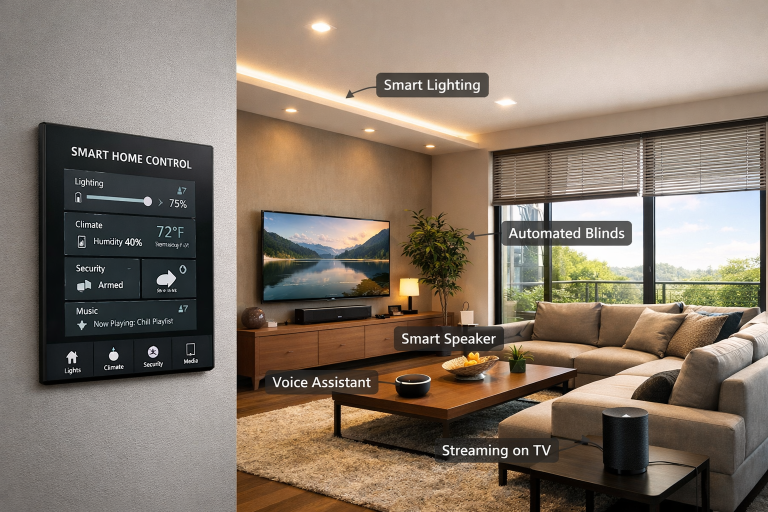
True integration comes from planning. Engaging with architects and designers at the earliest stages of a project means smart technology can be woven into the framework rather than added on later. Pre-planning for automated lighting, HVAC, and entertainment systems ensures these systems function seamlessly and complement a home’s architectural character.
Cable management, switch placement, and system compatibility are major considerations that can affect both aesthetics and usability. Smart integration allows for cleaner lines and hidden technology, ensuring devices do not disrupt the flow or appearance of your home.
Energy Efficiency and Sustainability
Smart homes play a pivotal role in promoting sustainability. Automation allows homeowners to set schedules for lighting, appliances, and climate systems based on occupancy and time of day, conserving energy and lowering costs. Devices like smart thermostats, occupancy sensors, and advanced window controls significantly reduce a home’s ecological footprint.
Integrating renewable energy sources, such as solar or wind, with smart energy management systems further increases self-sufficiency and reduces reliance on external power sources. Monitoring energy usage in real time helps residents make more environmentally responsible decisions every day.
Enhancing Comfort and Convenience
Automated environments offer homeowners a heightened sense of comfort. Whether it is setting a preferred temperature before arriving home or programming lights to match daily routines, smart solutions streamline how we manage our spaces. Voice assistants and multi-room control systems add a new dimension of hands-free convenience.
For families, smart kitchens and baths can aid everyday routines, while zoned heating and adjustable lighting make shared spaces versatile for relaxation or productivity. Personalized scenes allow each resident to control their surroundings with a single tap or voice command.
Security and Safety Features
Safety is at the forefront of every well-designed smart home. From video doorbells and smart locks to comprehensive surveillance and alarm systems, technology enables remote monitoring, alert notifications, and the management of entry points. These smart security features protect not just the property but also the well-being of its occupants.
Fire and carbon monoxide sensors, integrated water leak detectors, and emergency lighting add an extra layer of protection. Security-conscious homeowners can create the peace of mind that comes with checking their property’s status from virtually anywhere.
Collaborating with Professionals
Designing a home tailored to your lifestyle is most effective when supported by experienced architects and interior designers. Their knowledge ensures that technology choices are compatible, user-friendly, and visually integrated. Professionals can forecast needs, anticipate challenges, and lay the groundwork for future upgrades without complication.
Regular communication with these experts delivers smoother installation, optimal performance, and beautiful results. The partnership also helps homeowners avoid common mistakes, such as over-specifying technology or failing to consider long-term maintenance and scalability.
Future-Proofing Your Home
Technology evolves constantly. A future-proof smart home is built on platforms and systems that accommodate new devices, software updates, and expanded features. Ensuring interoperability between different brands and product generations is essential for continual improvement and ease of use.
Upgrading should be smooth, with infrastructure such as wiring, server racks, and power sources designed to support additions. By thinking ahead, homeowners can safeguard their investment and keep their living space up to date as technology and personal needs change.
Final Thoughts
Adopting smart solutions and personalized design allows homeowners to create residences that are adaptable, sustainable, and secure. By investing in forward-thinking planning and integrating innovative technology, today’s homes are equipped to meet the modern family’s evolving demands. Thoughtful use of custom floor plans and consultation with design professionals can transform any living space into a uniquely comfortable, high-performing, and future-ready home.